
Abstract:
Cardiac arrhythmia is a problem with the heart's electrical system that causes the heart to beat too fast, too slowly, or irregularly. Arrhythmia refers to heart rhythm disorders—a condition in which the heart's rhythm is abnormal. There are many different types of arrhythmias; they have various origins, cause different symptoms (or are asymptomatic), and carry varying prognoses.Excessive stretching of muscle fibers causes the heart to lose its contractility. Disturbances arise that lead to dangerous arrhythmias, such as atrial fibrillation or ventricular tachycardia. Blood turbulence occurs around deformed valves and dilated atria, promoting the formation of thrombi. Deformed valves can lead to a detached thrombus blocking an artery in the brain.
The heart possesses a spiral anatomical structure that serves to generate solitons. The process of turbulence alters the function of solitons, leading to cardiac rhythm disturbances. Arterial stiffness—or reduced elasticity of blood vessel walls—affects the ability to generate solitons (Brizhik L, 2016; Adamski, 2023). Solitons generated in the heart are responsible for cardiac activity as well as human emotional states. Soliton waves can be used to correct the informational state of a biological cell. Solitons act as a barrier that limits the intensity of spin waves.
In living organisms, spin waves arise from free-radical reactions and interact closely with soliton waves, which carry encoded programs for proper cell functioning and the maintenance of homeostasis. The discovery that structural elements of organisms possess pyroelectric, piezoelectric, and ferroelectric properties has opened up new perspectives for research in biophysics, bioelectronics, and the medical and psychological sciences. Enzymes absorb electric field energy to perform their functions and communicate.
The era of quantum medicine is approaching—an era in which enzymes, acting as transistors, will serve as primary therapeutic agents for treating various diseases. Another key therapeutic tool will be the ability to construct biocomputer algorithms capable of directing the functional programs of cells, tissues, and so forth. Solitons will play a significant role in emergency medicine and cardiology; the initiation of cardiac activity will be understood in terms of electric fields and soliton dynamics, paving the way for novel treatments for heart defects (Adamski 2023).
Keywords: cardiac conduction system, cardiac dysfunction, arrhythmias, soliton wave
Biography:
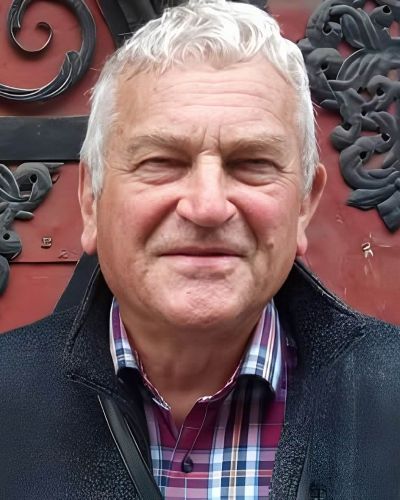
Dr. Adam Adamski operates on the principle that a human being is not merely a purely biological construct but also encompasses a foundation of biochemical, bioelectronic, informational, and cybernetic processes responsible for shaping human psychobiological processes.
Specializing in quantum psychology, he demonstrates that perceptual and mental processes have a quantum-informational basis, with solitons playing a particularly significant role in these processes.
He currently focuses his attention on cardiac function, demonstrating that solitons play a significant role in the heart's operation. Solitons propagate throughout the body, acting as carriers of health and disease regarding the human circulatory system; without them, cardiac function would be impossible.
He earned his doctoral degree from the John Paul II Catholic University of Lublin.
He spent over 20 years working at the University of Silesia in Katowice as an assistant professor of psychology. He currently serves as the director of the Institute of Naturotherapy and Occupational Therapy in Katowice. He is the author of over 100 publications in the fields of psychology, natural medicine, and cardiology.
© 2026 Mathews International LLC. All rights reserved.
