
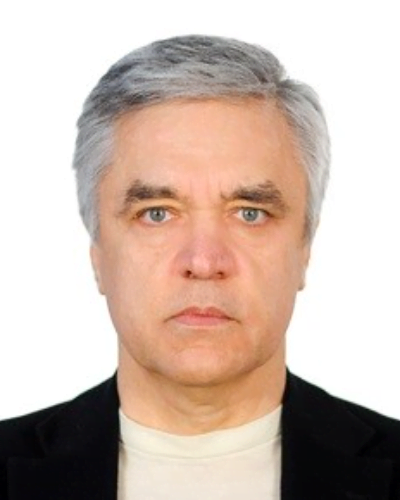
Vice-Director
N.D. Zelinskii Institute for Organic Chemistry of the Russian Academy of Sciences, Russian Federation
Abstract:
Catalytic Abs (catAbs) are multivalent immunoglobulins (Igs) with a capacity to hydrolyze the antigenic (Ag) substrate. In this sense, proteolytic Abs (Ab-proteases) represent Abs to provide proteolytic effects. Abs against Cardiac Myosin (CM) with proteolytic activity exhibiting targeted cleavage of CM molecule are of great value to monitor stages of autoimmune inflammation in patients with autoimmune myocardi-tis (AIM) and persons-at-risk.
AIM is just one of the chronic organ-specific autoimmune diseases resulting in a destruction of cardiac tissue by different tools, including highly aggressive and destructive autoAbs. Some of these autoAbs may also have a functional role in patients, as suggested by in vitro data as well as by preliminary clinical ob-servations, though further work is in progress to clarify this important issue. And along with canonical Abs, some of the families proven to occur are Abs possessing with catalytic (proteolytic) activity (catAbs or abzymes) and thus to belong to Abs with a feature of functionality! Such Ab-proteases have been found in a series of autoimmune disorders, including multiple sclerosis, autoimmune thyroiditis, etc.
The unique clinical case is a family of Ab-proteases detectable in AIM to cleave CM. Of great interest is the evolution of Ab-associated proteolytic activity at different stages of the disease progression. The ac-tivity of Ab-proteases was registered at the subclinical stages 4-12 months prior to the clinical illness. The activity of the Ab-proteases revealed significant correlation with scales of autoaggression and the disabil-ity of the patients with AIM as well. So, the activity of Ab-proteases and its dynamics tested would con-firm a high subclinical and predictive value of the tools as applicable for monitoring protocols.
So, further studies on Ab-mediated CM degradation and other targeted Ab-mediated proteolysis may pro-vide biomarkers of newer generations to monitor and to treat AIM patients at clinical stages and to prevent the disorder at subclinical stages in persons-at-risks to secure the efficacy of regenerative manipulations and for assessing the disease progression and predicting disability of the AIM patients and persons-at-risks.
Biography:
Sergey Suchkov was born in the City of Astrakhan, Russia, in a family of dynasty medical doctors. In 1980, graduated from Astrakhan State Medical University and was awarded with MD. In 1985, Suchkov maintained his PhD as a PhD student of the I.M. Sechenov Moscow Medical Academy and Institute of Medical Enzymology. In 2001, Suchkov maintained his Doctor Degree at the National Institute of Immunology, Russia. From 1989 through 1995, Dr Suchkov was being a Head of the Lab of Clinical Immunology, Helmholtz Eye Research Institute in Moscow. From 1995 through 2004 - a Chair of the Dept for Clinical Immunology, Moscow Clinical Research Institute (MONIKI). In 1993-1996, Dr Suchkov was a Secretary-in-Chief of the Editorial Board, Biomedical Science, an international journal published jointly by the USSR Academy of Sciences and the Royal Society of Chemistry, UK.
At present, Dr Sergey Suchkov, MD, PhD, is: Director for Center of Biodesign of N.D. Zelinskii Institute for Organic Chemistry of the Russian Academy of Sciences, Moscow, Russia; Senior Scientific Advisor of China Hong Kong Innovation International Business Association, Hong Kong; R&D Director of InMedStar, Russia. Member of the: Russian Academy of Natural Sciences, Moscow, Russia; New York Academy of Sciences, USA; American Chemical Society (ACS), USA; American Heart Association (AHA), USA; European Association for Medical Education (AMEE), Dundee, UK; EPMA (European Association for Predictive, Preventive and Personalized Medicine), Brussels, EU; ARVO (American Association for Research in Vision and Ophthalmology); ISER (International Society for Eye Research)
© 2026 Mathews International LLC. All rights reserved.
